Built for the Whole Fleet:
Right-Sized APC Hardware for Every Vehicle Type.
A 40-foot bus with two doors and a 5-door articulated vehicle don’t have the same counting problem. Here’s why the hardware shouldn’t be identical either — and how one platform still keeps the data unified.
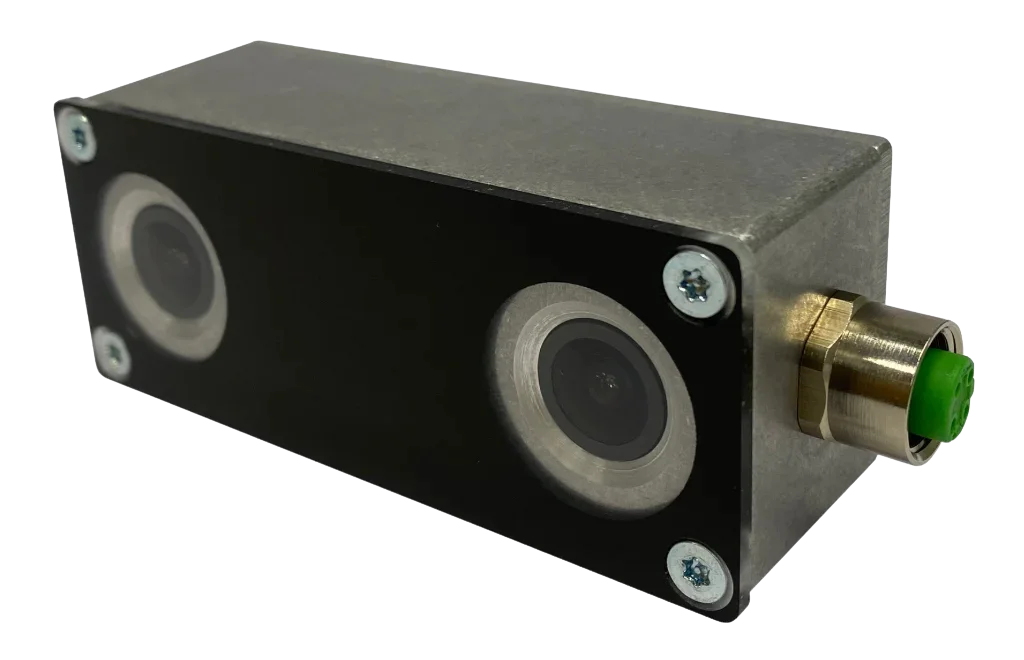
EYES 3 SENSOR
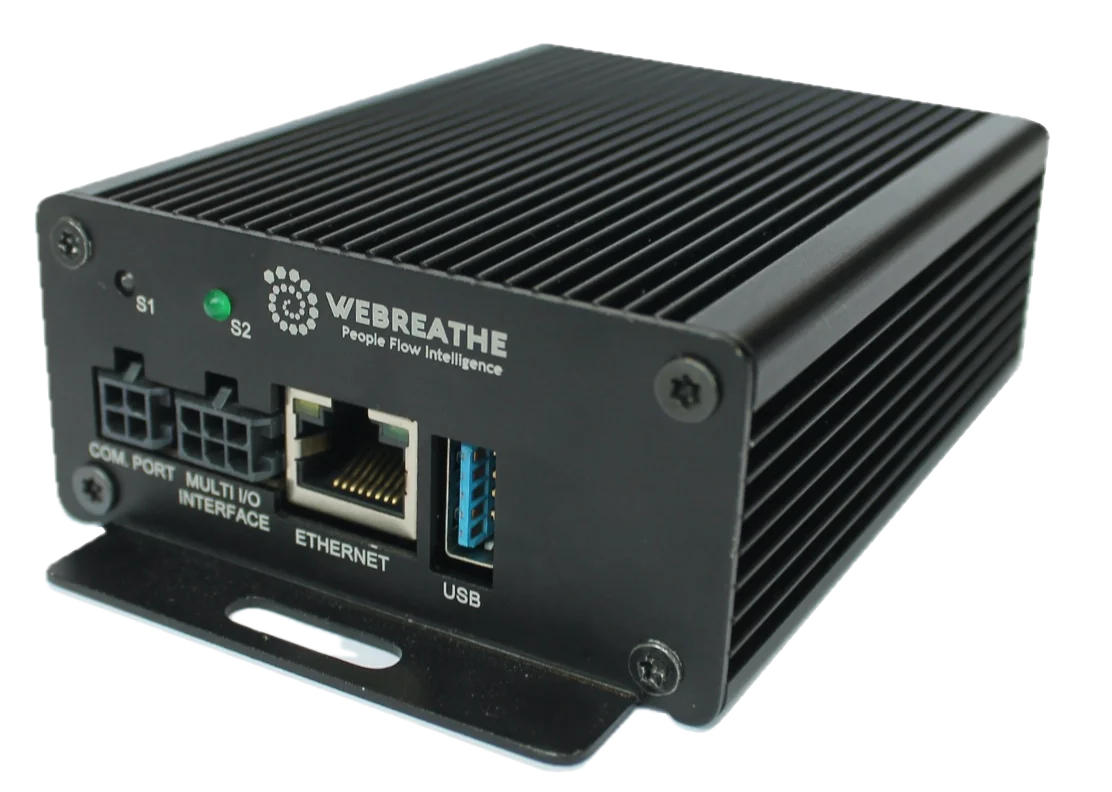
BRAIN CALCULATOR
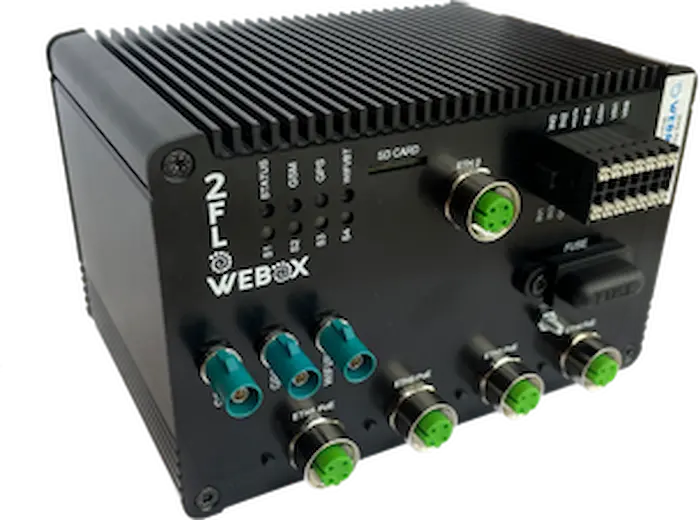
WEBOX CALCULATOR
Most APC conversations start with a single question — “how accurate is the sensor?” — and skip a more basic one: does the same calculator unit actually make sense for every vehicle in the fleet?
It’s a fair thing to overlook. A door-mounted counting sensor is a door-mounted counting sensor, whether it’s on a 2-door cutaway or a 5-door articulated bus. But the unit that aggregates and transmits that data — the calculator — has to match the vehicle’s complexity. A 2-door bus and a high-capacity vehicle with four or five doors are fundamentally different counting jobs, even if the sensor at each doorway looks identical.
Agencies that don’t plan for this end up discovering it mid-installation — a calculator sized for a standard bus gets asked to aggregate data from twice as many doors as it was built for, or a lighter unit gets bolted into a vehicle that needed the higher-capacity option from the start. Neither is a hardware failure. It’s a mismatch that shows up in the data quality, not in a spec sheet.
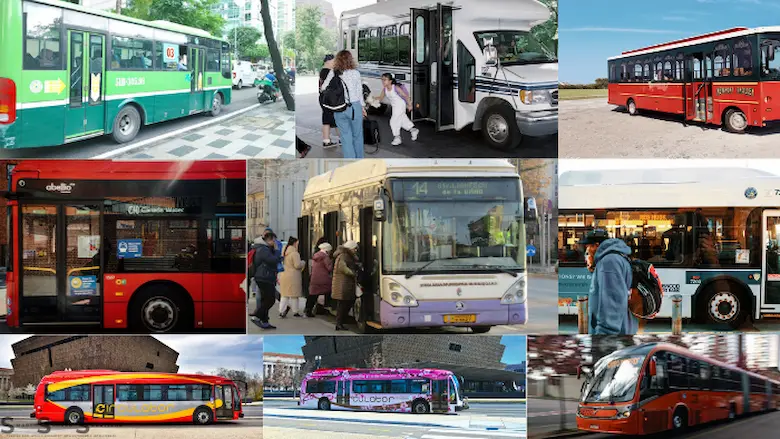
Same counting sensor at every door. Different calculator depending on how many doors there are.
The counting sensor stays the same across the whole fleet. The calculator that aggregates it shouldn’t — door count and vehicle type should decide which one goes on which vehicle.
Here’s what that mismatch actually costs an agency, and how a hardware lineup built around vehicle configuration avoids it.
The Challenges That Show Up After the Sensors Are Already Installed
None of these show up in a product demo. They show up three months into a deployment.
Undersized Calculators on High-Door-Count Vehicles
A calculator built for a 2-door bus asked to aggregate four or five sensor feeds either drops accuracy or needs a second unit bolted in — an unplanned cost and an unplanned wiring job.
Oversized Hardware on Simple Routes
The inverse problem: a heavier, higher-capacity controller on a standard 2-door circulator bus, paying for camera and PoE capacity the vehicle will never use.
Fragmented Data Across Hardware Tiers
Different calculator models feeding different formats to dispatch — someone has to reconcile it before it’s usable for reporting.
Retrofit Downtime
Every hour a vehicle is out of service for installation is an hour it’s not running a route — and a mismatched hardware plan often means a second install visit later.
Reporting Gaps at Funding Time
Inconsistent counting accuracy across a mixed fleet shows up as noise in ridership reports right when funding bodies expect clean numbers.
A Support Contract That Doesn’t Cover Every Unit
Mixed hardware generations bought piecemeal over the years often means mixed support terms — some units covered, some quietly out of warranty.
How the 2FLOW Platform Matches Hardware to the Vehicle
Our Webreathe 2FLOW automatic passenger counting platform, which is built around exactly this problem: one counting sensor, two calculator tiers, one cloud platform tying it all together.
The Right Calculator for the Vehicle, Not the Catalog
Standard buses and shuttles with up to three doors run on the BRAIN calculator — a compact, low-draw unit built for straightforward retrofit. Vehicles with more doors, higher passenger volume, or rail and tram applications run on WEBOX, which aggregates data from up to five EYES 3 sensors on a single controller — enough for a 4- or 5-door articulated bus or a multi-door rail vehicle without adding a second unit.
One Counting Sensor, Every Doorway
Regardless of which calculator a vehicle runs, every door uses the same EYES 3 sensor — 3D stereoscopic counting at better than 98% precision. That consistency is what keeps ridership numbers comparable across a mixed fleet instead of varying by hardware generation.
One Data Stream, Regardless of Hardware Tier
Whether a vehicle runs BRAIN or WEBOX, counting data, GPS position, and timestamps land in the same cloud platform in the same format — no separate reconciliation step for “the bus fleet” versus “the high-capacity fleet.”
Fast, Single-Visit Retrofit
Both calculator units install as a compact retrofit — mechanical mounting kit, wiring kit, and antenna — without redesigning the vehicle’s electrical layout, so matching the hardware correctly the first time means one install visit, not two.
“Get the hardware tier right per vehicle and the data looks the same across the whole fleet. Get it wrong, and every report afterward inherits that mismatch.”
— Smart Sensor Solutions
Matching Hardware to Your Fleet: The Two Tiers
Both units share the same core job — aggregate sensor and GPS data, encrypt it, and send it to the cloud in real time. Where they differ is capacity.
BRAIN — Standard Buses, Coaches, Shuttles
Built for vehicles with up to three doors. Compact at 102mm x 80mm x 38mm and 285g, drawing just 5W, with GPS/GLONASS positioning and 4G LTE Cat 4 connectivity. Sized for a fast, minimal-footprint retrofit on the vehicles that make up most of a fixed-route fleet.
WEBOX — High-Capacity and Multi-Door Vehicles
Built for articulated buses, BRT vehicles, and rail or tram applications with four or more doors. Aggregates up to five EYES 3 sensors on one controller, supports up to eight cameras with real-time AI analysis, and outputs 60W across four PoE ports — enough to run the doors and the onboard systems from a single unit.
The decision isn’t complicated once the vehicle’s door count is known — it’s simply a spec that needs to be part of the fleet inventory before hardware gets ordered, not discovered during installation.
EYES 3: The One Constant Across a Mixed Fleet
Whichever calculator a vehicle runs, every doorway uses this same sensor — which is exactly what keeps ridership data comparable across a fleet with different vehicle types and hardware tiers.
Rated IP64/IK07 and built to railway standards (EN50155, EN 61000, EN45545-2), it’s designed to run unattended through years of weather and door-slam vibration on any vehicle it’s mounted to.
What to Confirm Before Hardware Goes on the Order Sheet
Whatever platform you’re evaluating, these are the specifics worth nailing down before a single unit gets installed.
-
Door count per vehicle type — know this before ordering hardware, not after the first install visit
-
Calculator capacity limits — confirm how many sensors each controller tier actually supports, and what happens if a route gets a higher-capacity vehicle later
-
Unified data format — verify that data from every hardware tier lands in the same platform in the same structure, with no manual reconciliation
-
Historical data retention — confirm how many years of route and ridership history the platform stores across every vehicle
-
Support terms per hardware tier — get warranty and maintenance coverage in writing for both calculator tiers, not just the sensor
-
Installation timeline — ask how many install visits a mixed fleet actually requires when hardware is matched correctly the first time
“A fleet inventory with accurate door counts is a five-minute conversation before hardware is ordered. Skipping it is a much longer conversation after the first vehicle gets retrofitted.”
— Smart Sensor Solutions
Frequently Asked Questions
Does the same hardware work across our whole fleet, including higher-capacity vehicles?
The counting sensor is the same everywhere. The calculator isn’t — standard buses with up to three doors run on the compact BRAIN unit, while higher-capacity or multi-door vehicles run on WEBOX, which can aggregate up to five sensors on one controller.
What happens if a route gets upgraded to a higher-capacity vehicle later?
The EYES 3 sensors at each door carry over. Only the calculator needs to change to the higher-capacity WEBOX tier, and it installs the same way the original unit did — no changes to the counting hardware itself.
How accurate is the passenger counting, really?
The EYES 3 sensor’s 3D stereoscopic counting is rated at better than 98% precision for boardings and alightings, including differentiation between adults, children, wheelchair users, strollers, and bicycles — consistent across every vehicle in the fleet.
Does mixing BRAIN and WEBOX units complicate reporting?
No. Both calculator tiers feed the same cloud platform in the same data format, so ridership and location reporting looks identical whether a given trip ran on a BRAIN-equipped bus or a WEBOX-equipped vehicle.
Not Sure Which Hardware Tier Your Fleet Needs?
Send us your vehicle mix — door counts, body types, and any high-capacity units on order — and our team will map out exactly which calculator goes where before anything ships.
Serving Canada and the United States · Tel: +1 (855) 613 4486 · info@smartsensrsolutions.com